
The most popular and comprehensive Open Source ECM platform
Let us know more


Universal Description, Discovery and Integration (UDDI) has been a long-ignored component of the SOA framework. It is an open industry initiative that has been approved as an OASIS standard to allow the registration and discovery of web services. The current specification is at version 3.
UDDI spans the SOA stack as shown in this diagram:
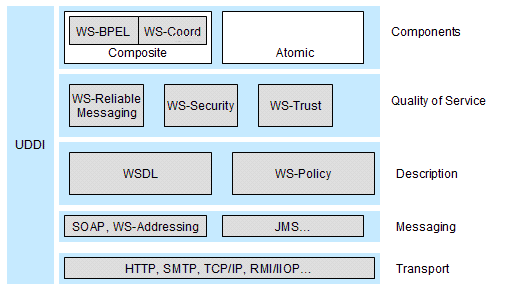
As a Web Services registry, UDDI provides metadata about and describtions of interfaces for interacting with Web Services. The metadata could include, for example, a description of the business logic encapsulated in the service, the name of the publisher, version information, and a technical description about the use of the API.
The first generation of SOA implementations have tended to be fairly self contained. SOA implementors have generally been well aware of which services exist in their organization and knew how to get documentation for how to access those services. There weren’t enough services to warrant the need for a directory.
But as the number of services developed internally and introduced from vendor applications increase, governance become more important. Governance provides better understanding and controls to helping organizations bring order to their SOA environments.
Anne Thomas Manes of Burton Group in an interview (and here) comments that UDDI is seeing more traction. She notes that there are competing technologies to UDDI, like IBM’s WebSphere Registry and Repository and ebXML. But IBM’s registry product isn’t compatible with UDDI, isolating them from interoperability with most of the market which is using UDDI. As an alternative to UDDI, ebXML has had a much lower profile, but it has been garnering some success.
Among UDDI vendors, HP is dominant from its acquisition of Mercury/Systinet. Oracle and Tibco are both using Systinet. The next runner up is webMethods which is competing with technology that they acquired from Infravio. At this time, neither Microsoft nor SAP have SOA governance products, but that is likely to change.


