
The most popular and comprehensive Open Source ECM platform
Let us know more


| Java, as we know it, has only been around for a little over a decade. C++ has been around for nearly three decades. Basic is forty years old, and Fortran is more than fifty years old. In between there have been a number of other notable programming languages like Python, Perl, Eiffel, SmallTalk and LISP.
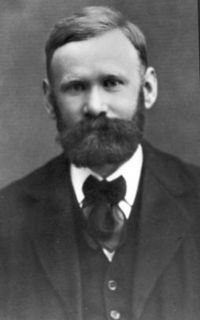
Lately Ruby has been attracting a growing number of followers. But one language is rapidly gaining support is one that might become a paradigm changer — Erlang. Erlang is a general-purpose concurrent programming language and runtime system. It was designed by the telecommunications company Ericsson in the late 1980s to support distributed, fault-tolerant, soft-real-time, non-stop applications. Erlang supports hot swapping so that code can be changed without having to stop the system. Erlang was named after the Danish mathematician Agner Krarup Erlang who worked in the early 1900s solving some important statistical problems related to telephonic communications. |
 |
Some of the advantages of the Erlang language include:
The Erlang language is very well suited for handling many of types of communications, mobile, messaging and web-based applications that are now so popular. Even more important, with the proliferation of multi-core CPUs, efficient utilization of the simultaneous processing power of the individual cores is difficult to do. Erlang simplifies the process. Erlang programs try to “model how we think and interact”.


